Carbon Molecular Sieve (CMS) is the core functional material of PSA pressure swing adsorption nitrogen generators, which determines the nitrogen separation efficiency, output purity, and service life of the whole equipment. Carbon molecular sieve is a porous carbon material with strong oxygen adsorption capacity, but it is prone to pulverization, aging, and failure under the influence of air impurities, pressure fluctuation, and improper operation. CMS pulverization is the most common fault of nitrogen generators, which will cause pipeline blockage, reduced nitrogen purity, increased equipment operating noise, and shortened service life. Mastering professional anti-pulverization maintenance skills is crucial to maintain the long-term stable operation of carbon molecular sieve nitrogen generators and reduce equipment operation and maintenance costs.
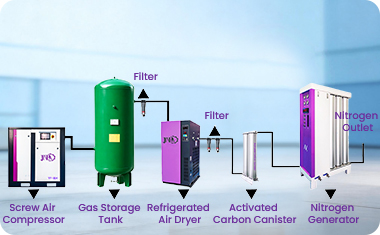
The primary anti-pulverization maintenance measure is to optimize the air pretreatment system to avoid impurity pollution of the molecular sieve. Oil contamination is the main cause of CMS failure and pulverization. The oil mist and oil vapor in the compressed air will adhere to the surface and pores of the carbon molecular sieve, blocking the adsorption channels and causing molecular sieve agglomeration and pulverization. It is necessary to regularly check and replace the filter elements of the primary, medium, and high-efficiency oil-water filters of the equipment, keep the air drying system in normal operation, control the dew point of compressed air below -40℃, and ensure zero oil and low moisture of the intake air. At the same time, avoid long-term idle operation of the equipment. Long-term shutdown will cause moisture in the air to invade the molecular sieve tower, leading to molecular sieve deliquescence and pulverization. Regular low-load startup and purging are required to keep the molecular sieve dry and active.
Standardizing equipment operation and pressure regulation is the key to preventing mechanical pulverization of CMS. The rapid pressure rise and fall in the adsorption tower will cause strong impact and friction on the carbon molecular sieve particles, resulting in particle fragmentation and pulverization. It is necessary to strictly follow the equipment operation specifications, avoid sudden start-stop and sudden load adjustment, and ensure that the equipment pressure rises and falls steadily within the rated range. Regularly check the buffer valve and pressure regulating valve of the equipment to avoid pressure impact caused by valve failure. In addition, regular inspection and maintenance of the molecular sieve tower packing state are required. After long-term operation, the molecular sieve will sink and loosen, resulting in gap air flow and local excessive friction. Regularly supplement and compact the molecular sieve, check the tower body sealing performance, and prevent air leakage and mixed gas. Scientific daily maintenance can effectively delay CMS pulverization aging, maintain the nitrogen production efficiency of the equipment, extend the service life of the molecular sieve by more than 30%, and reduce the frequency of equipment failure and replacement cost.