In laboratory testing, small-batch sample processing, miniature packaging
and pilot process scenarios, gas consumption is usually low, yet stable gas
supply and consistent parameters remain essential. Traditional gas cylinders
require frequent replacement, and it is hard to predict remaining gas volume.
Cylinders also occupy storage space and are subject to storage regulations in
compact lab areas. Under such circumstances, on-site gas generation solutions
tailored for low-consumption conditions have become a practical alternative for
many small process units and research laboratories. With compact integrated
design, these systems continuously produce inert shielding gas within limited
space to accommodate intermittent, low-load gas demands.
Such integrated systems adopt mainstream technologies including pressure
swing adsorption and membrane separation. Each technology differs in applicable
purity range and maintenance requirements. Membrane separation features simple
construction, fast startup and few moving parts with low routine maintenance
workload, suitable for conditions with moderate purity requirements and
long-term continuous light-duty operation. Pressure swing adsorption combined
with multi-stage purification modules can achieve higher purity levels, which
fits supporting precision analytical instruments such as gas chromatographs and
mass spectrometers, or material tests with strict limits on oxygen and
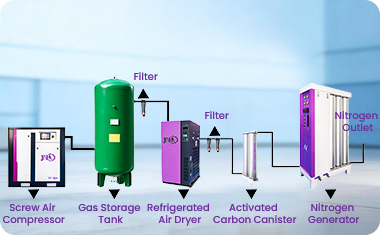
impurities. A complete system generally integrates air pretreatment, core
separation modules, monitoring units and buffer tanks. Pre-filtration and drying
remove oil, moisture and solid particles from compressed air, preventing
impurities from entering core separation components and slowing performance
degradation.
Low-flow gas demand exists across a wide range of sectors. In analytical
laboratories, gas chromatographs and LC-MS instruments require stable carrier
gas. Fluctuations in gas parameters will distort baselines and peak shapes and
undermine the reliability of test data. In biomedical research, inert atmosphere
is required for sample dispensing, reagent storage and freeze-dried sample
preparation to isolate oxygen and prevent oxidative deterioration. Small-scale
chemical pilot and demo reactors need gas for reactor purging and material
protection. Although total consumption is low, gas supply interruption may
disrupt the whole process. The systems are also suitable for nitrogen flushing
in small-batch packaging of specialty foods and beverages to preserve flavor.
Other typical uses include prototype packaging of electronic components, heat
treatment protection for new material samples and shielding for test welding.
These scenarios share a common feature: total gas consumption is modest, yet
supply failure may lead to sample loss and repeated tests.
Selection should not rely solely on rated flow. Actual working conditions
must be sorted out to avoid mismatching. First, distinguish average consumption
from instantaneous peak flow. Many analytical instruments consume gas
intermittently, and short-term peak flow may exceed the average. Without buffer
tanks, pressure fluctuation is likely to occur. Second, define target purity and
dew point requirements. Different processes have different tolerance to
impurities. Over-specifying purification modules brings unnecessary costs, while
insufficient purity fails process requirements. The quality of incoming
compressed air must also be assessed, since inlet pressure, cleanliness and dew
point form the foundation of stable operation. Poor feed air accelerates wear of
filter elements and adsorption consumables. Site installation conditions need
evaluation as well, including footprint, ambient temperature and humidity,
ventilation and noise tolerance. Safety risks of gas accumulation should be
addressed when the unit is placed in confined spaces. Long-term operating
expenditure should also be considered, covering consumable replacement cycles,
energy consumption and instrument calibration, to evaluate overall economy.
After commissioning, standardized maintenance is critical to consistent gas
supply. Daily inspections focus on inlet pressure, outlet pressure, purity and
dew point readings, together with running noise and pipe leakage. Filter
cartridges shall be replaced on schedule following manufacturer guidelines.
Adsorption-based units require regular regeneration or renewal of adsorbents,
while membrane systems rely heavily on clean and dry feed air. Startup and
shutdown must follow operating procedures. A stabilization period is required
before connecting the gas to instruments after startup. Pipes shall be
depressurized and protected from dust during long idle periods. Operators should
learn basic anomaly diagnosis. If purity or pressure drifts continuously, check
upstream air supply and filtration components promptly and avoid delivering gas
that fails specification. Safety management is indispensable. Sufficient
ventilation must be guaranteed in enclosed areas to control risks related to gas
displacement.
As research and custom small-batch manufacturing keep advancing, low-flow
gas demand in niche applications keeps growing. Compact on-site gas generation
solutions, with small footprint, flexible deployment and self-controlled gas
supply, well match the needs of laboratories and small process units. With
proper parameter assessment, suitable technology selection and regular
maintenance, the systems can deliver qualified gas steadily, reduce reliance on
bottled gas, and offer reliable inert gas support for research trials and
small-scale production.