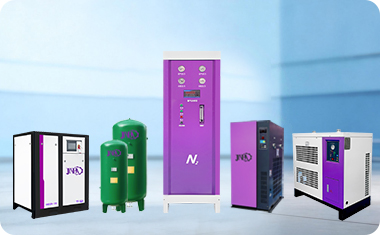
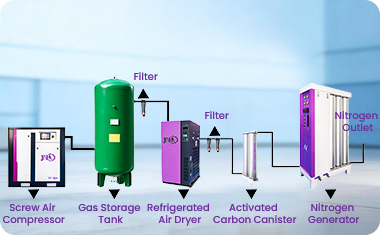
Adjusting nitrogen purity is a core operational skill for home nitrogen generator users, and reasonable purity adjustment can meet different household usage scenarios, including tire inflation, food fresh-keeping, electronic maintenance and other different demand standards. The nitrogen purity of household generators is adjustable in the range of 90%–99.9%, and different scenarios correspond to different optimal purity values: tire inflation requires 95%–98% purity, food sealed fresh-keeping requires 98%–99.9% high purity, and ordinary daily protection can use 90%–95% conventional purity. Before adjusting the purity, users need to understand the working principle of the equipment: home nitrogen generators use pressure swing adsorption (PSA) technology, and nitrogen purity is mainly affected by adsorption pressure, gas flow rate, and molecular sieve working time, so purity adjustment is realized by regulating the system pressure and flow parameters.
The standard adjustment steps start with equipment standby preparation. Start the generator according to the formal startup procedure, complete self-check and pressure stabilization, and keep the machine in idle standby state without gas output. Find the “Purity Adjustment” or “System Pressure” functional button on the control panel; most household models adopt digital touch key adjustment, with clear parameter display. To increase nitrogen purity, appropriately increase the system working pressure (adjust from 0.5MPa to 0.6–0.7MPa) and reduce the gas output flow rate. Higher pressure enables the molecular sieve to fully adsorb oxygen, moisture and impurities in the air, and lower flow rate prolongs the air adsorption separation time, thus significantly improving nitrogen purity. After adjusting the parameters, let the machine run idle for 3–5 minutes to stabilize the purity value, and check the real-time purity data on the panel until it reaches the target standard.
To reduce nitrogen purity (suitable for low-demand scenarios to save energy), reduce the system working pressure appropriately and increase the gas output flow rate. Low pressure and high flow rate will shorten the air separation time, reduce the adsorption efficiency of impurities, and lower the nitrogen purity, which can reduce equipment power consumption and extend the service life of the molecular sieve. It is crucial to avoid extreme parameter adjustment in household use: do not adjust the pressure to exceed 0.8MPa for a long time, which will cause pipeline pressure overload; do not pursue ultra-high purity blindly, which will lead to reduced gas output efficiency and increased energy consumption. After each purity adjustment, conduct a parameter locking operation (most models have a one-key locking function) to prevent parameter drift caused by accidental touch. In addition, regular calibration of the purity sensor every 3 months is required to ensure accurate adjustment data, ensuring that the nitrogen purity fully matches the actual usage needs of the family.