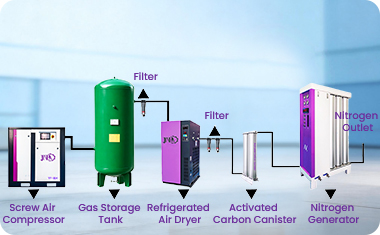
Pressure equalization time is one of the core key parameters of PSA double-tower nitrogen generators, which directly affects nitrogen production efficiency, nitrogen purity, gas yield, and equipment energy consumption. The working principle of PSA double-tower nitrogen generators is based on the selective adsorption principle of carbon molecular sieves. The two adsorption towers alternately complete pressure adsorption, pressure equalization decompression, desorption regeneration, and pressure boosting circulation processes. The pressure equalization stage is the key link to recover residual pressure and gas in the adsorption tower, and reasonable optimization of pressure equalization time can significantly improve the gas utilization rate and overall working efficiency of the equipment.
The standard pressure equalization time of conventional PSA double-tower nitrogen generators ranges from 0.8s to 2.5s, and the optimal setting needs to be adjusted according to equipment model, nitrogen purity requirements, and working flow. For low-purity nitrogen production scenarios with purity below 99.9%, the pressure equalization time can be set to 1.0s to 1.5s, which can complete rapid pressure equalization and cycle switching, improve the working cycle frequency of the equipment, and increase nitrogen output. For high-purity nitrogen production above 99.99%, it is necessary to appropriately extend the pressure equalization time to 1.8s to 2.5s, so that the residual pressure and unadsorbed nitrogen in the tower can be fully recovered, avoid excessive pressure difference causing molecular sieve impact and adsorption failure, and ensure stable nitrogen purity.
Unreasonable pressure equalization time setting will cause obvious equipment performance degradation. If the pressure equalization time is too short, the pressure between the two towers cannot be balanced completely, resulting in insufficient gas recovery, reduced nitrogen yield, and severe pressure impact on the molecular sieve, which accelerates molecular sieve aging and reduces equipment service life. If the pressure equalization time is too long, the single working cycle of the equipment is prolonged, the overall operating efficiency is reduced, and invalid energy consumption is increased. In actual operation, dynamic optimization is required according to ambient temperature and working load: appropriately extend the pressure equalization time in low-temperature environments to ensure stable pressure transmission, and slightly shorten the pressure equalization time under full-load operation to balance efficiency and stability. Regular calibration of pressure equalization parameters is an important part of equipment daily maintenance, which can keep the equipment in the optimal working state for a long time.