As the carbon peaking and carbon neutrality goals move forward, the new
energy industrial chain keeps expanding, and standards for process environment
control in lithium battery, photovoltaic, hydrogen energy and other segments
keep improving. As basic support for production procedures, inert shielding gas
with stable supply, proper cleanliness and manageable operation cost directly
affects production line operation and product quality. On-site gas generation
solutions, thanks to their flexibility, have gradually become a preferred gas
supply option for many new energy manufacturing projects. Carbon molecular sieve
nitrogen generation technology has also seen wider practical adoption in such
scenarios.
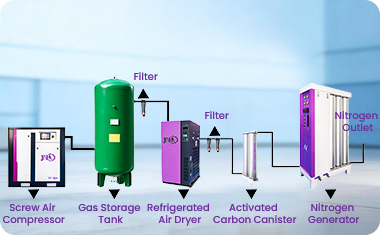
Carbon molecular sieve serves as the core adsorbent in pressure swing
adsorption nitrogen generation systems. Based on the difference in diffusion
speed of various gas molecules inside micropores, it preferentially adsorbs
oxygen and moisture from compressed air under pressurized conditions to separate
nitrogen. When pressure drops, adsorbed components desorb and discharge, and the
molecular sieve is regenerated. Two adsorption towers work alternately to
maintain continuous gas supply. Using compressed air as raw material, the whole
system requires no extra feedstock. Electrically controlled valves switch
between adsorption and regeneration cycles, supporting a high level of
automation. Operators can adjust nitrogen purity and flow within a certain range
according to real-time consumption to match the requirements of different
working procedures.
Multiple procedures in lithium battery manufacturing require inert
surroundings with low oxygen and low moisture. During cathode material
synthesis, electrode coating, cell winding, electrolyte filling, sealing and
battery recycling, oxygen and moisture may trigger oxidation of active materials
and electrolyte deterioration, causing process fluctuation. A steady nitrogen
atmosphere blocks unwanted components, lowers operational risks and reduces
defective products. Different procedures set different nitrogen specifications.
Some fine manufacturing steps demand strict standards on gas purity and dew
point, so supporting equipment must maintain consistent working conditions for a
long time and avoid purity fluctuation that disturbs production.
Photovoltaic silicon material production also relies on inert gas
protection. In silicon material purification, high-temperature silicon wafer
processing and module welding, silicon tends to react with oxygen at high
temperatures and form oxide layers that impair subsequent photoelectric
performance. Nitrogen purging and atmosphere protection reduce oxidation loss
and stabilize processing conditions to help control production waste. In
hydrogen energy and fuel cell sectors, nitrogen acts as a safe replacement
medium for pipeline sweeping, tank purging and component assembly. It displaces
air inside pipelines and prevents risks from flammable gas mixtures, complying
with site safety regulations.
Compared with traditional liquid nitrogen tanks and bottled nitrogen
supplied externally, on-site gas generation removes transportation and tank
replacement links, cuts energy consumption and uncertainties in logistics, and
eases storage management. External gas supply may suffer from outage risks due
to delivery scheduling, while on-site units can produce gas continuously to
match non-stop production schedules. Most equipment is skid-mounted with compact
footprint, short installation and commissioning cycle. Routine maintenance
mainly covers inspection of filters and valves with a simple management
routine.
Nevertheless, stable system operation relies on proper pre-design matching.
In the planning phase, unit configuration shall be determined based on peak gas
consumption, demand fluctuation and ambient temperature and humidity. Molecular
sieve quality, pre-treatment filter units and control systems all influence
long-term performance. Poor pre-treatment of compressed air allows oil, water
and dust into adsorption towers, accelerating performance degradation and
shortening the service life of molecular sieve. Therefore, pre-filtration and
drying units are essential for long-term stable operation.
Along with the long-term growth of the new energy industry, process
standards will keep upgrading and gas demand will become more diversified. Built
on proven separation principles, carbon molecular sieve nitrogen generation
features on-site production and adjustable parameters, fitting inert gas supply
requirements of many new energy manufacturing scenarios. With continuous
upgrades in adsorbent materials and control algorithms, such gas preparation
systems will achieve better energy efficiency and faster response in the future,
delivering reliable supporting services for green manufacturing in new
energy.