The full life cycle cost (LCC) calculation model for industrial nitrogen generators is a systematic quantitative analysis tool that covers the entire service process of equipment from procurement, installation, operation and maintenance to renovation and scrapping, aiming to avoid one-sided decision-making based only on initial purchase cost. This model divides the total life cycle cost into four core modules: initial investment cost, operational energy consumption cost, daily maintenance cost, and end-of-life disposal cost, realizing full-cycle cost traceability and accurate budgeting for industrial nitrogen supply equipment. Different from traditional single-cost accounting methods, the LCC model fully considers the long-term operating attributes of industrial nitrogen generators, especially the energy consumption difference of different nitrogen production technologies such as membrane separation, PSA (Pressure Swing Adsorption), and cryogenic liquefaction, which determine the core cost gap of equipment long-term operation.
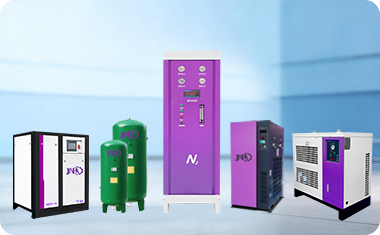
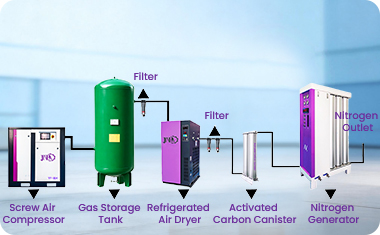
The initial investment cost module includes equipment purchase fees, on-site installation and commissioning fees, auxiliary equipment matching fees (air compressors, dryers, filters), and site transformation fees. This part is a one-time fixed cost, accounting for 20%–30% of the total life cycle cost of conventional industrial nitrogen generators. The operational energy consumption cost is the largest proportion of LCC, mainly including the power consumption of the nitrogen generator body and supporting air compression equipment, as well as the gas loss rate in the nitrogen production process. For long-term continuous operating industrial equipment, energy consumption costs accumulated over 5–8 years of service life often exceed the initial equipment investment, becoming the key factor affecting economic benefits. The model adopts dynamic power consumption calculation parameters, matching different nitrogen purity and flow working conditions to simulate real operating energy consumption data.
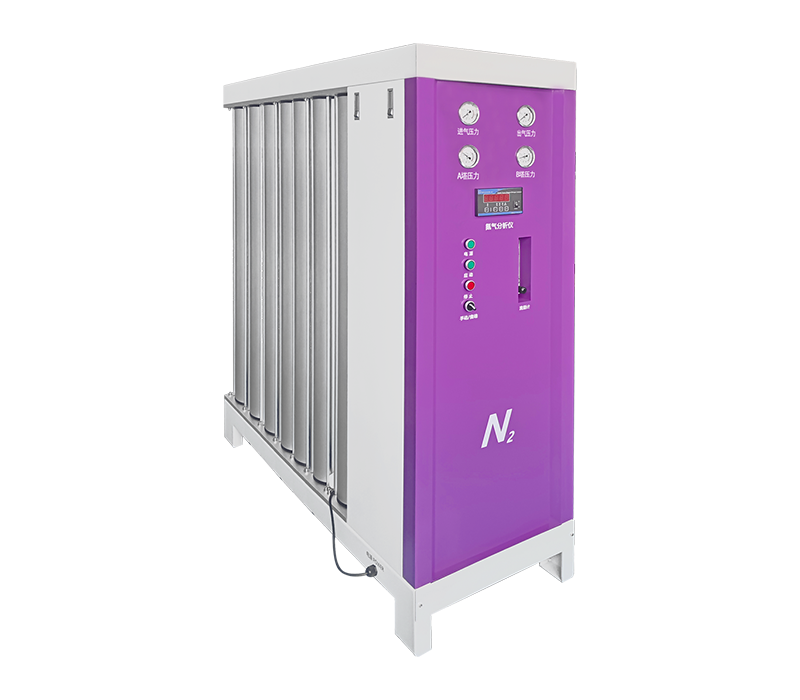
The daily maintenance cost covers regular replacement of consumables (filter elements, adsorption materials, membrane modules), routine inspection and labor costs, and fault repair and component replacement fees. Different technical types of nitrogen generators have obvious differences in maintenance costs: membrane separation equipment has fewer consumables and lower annual maintenance costs, while PSA nitrogen generators need regular replacement of carbon molecular sieves, resulting in relatively higher maintenance expenses. The end-of-life disposal cost includes equipment dismantling fees, waste material recycling income and environmental treatment costs. The LCC model verifies the economic service life of the equipment through cost amortization calculation, provides data support for enterprise equipment selection, replacement cycle formulation and operation cost control, and effectively improves the refined management level of industrial gas supply systems.