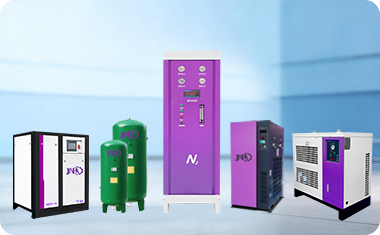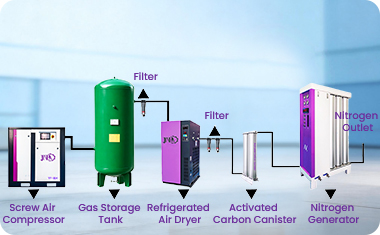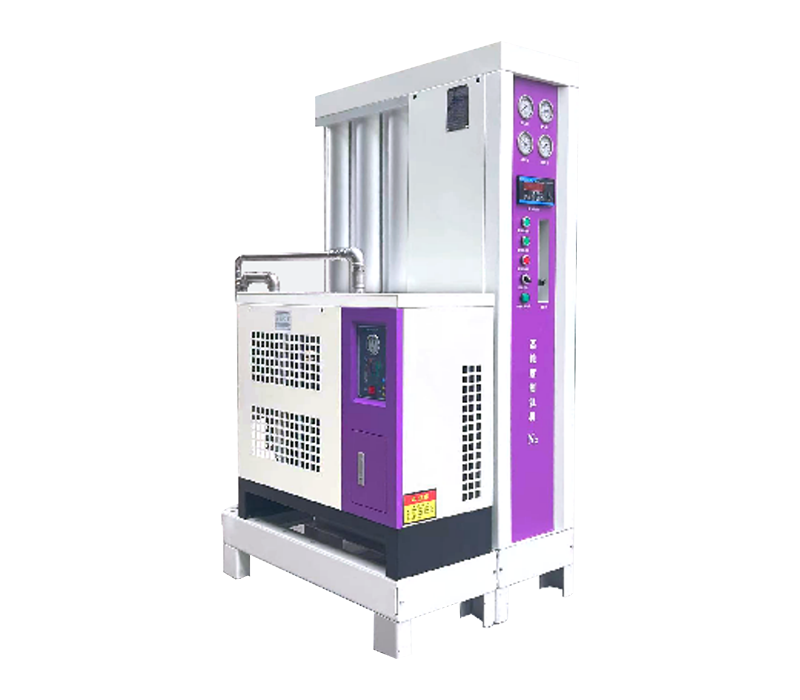
Rubber vulcanization industrial nitrogen generator is high-pressure customized PSA nitrogen generation equipment developed for cross-linking curing molding of natural rubber, synthetic rubber, silicone rubber and composite rubber products, specially optimized for high-temperature and high-pressure vulcanization working conditions of tire, sealing gasket, rubber hose and shock-absorbing rubber parts. Equipped with reinforced pressure-resistant adsorption towers and high-strength pneumatic control valves, this generator can stably output nitrogen with purity between 99% and 99.99% and adjustable outlet pressure up to 2.8MPa, fully matching pressure parameters of tire vulcanizing bladders, flat vulcanizing machines and closed rubber curing kilns. Different from ordinary industrial nitrogen equipment, it adds anti-oil-pollution gas pretreatment module to adapt to mixed volatile gas environment inside vulcanization workshops, preventing rubber additive vapor from damaging internal molecular sieve components. As a core upgraded device replacing traditional steam vulcanization medium, it has become standard configuration for medium and large rubber manufacturing enterprises to upgrade vulcanization processes.
Replacing steam and compressed air vulcanization medium, high-purity nitrogen provided by this generator fundamentally optimizes vulcanization molding effect and prolongs service life of vulcanization molds and capsules. In traditional steam vulcanization, condensed water will form local low-temperature areas inside vulcanizing bladders, leading to uneven heating of rubber materials, incomplete cross-linking reaction, internal bubble defects and delamination of multi-layer composite rubber products. Nitrogen is a dry gaseous medium without condensation phenomenon, maintaining uniform pressure and constant temperature inside closed vulcanization molds throughout the curing process, enabling complete and stable rubber molecular cross-linking reaction. Finished rubber products feature denser internal structure, higher compression resistance and aging resistance; for automotive tires, nitrogen vulcanization improves tire uniformity, wear resistance and burst resistance, increasing driving mileage by nearly 10%. Meanwhile, oxygen-free nitrogen atmosphere avoids oxidative corrosion of metal vulcanization molds and rubber bladders, reducing thermal oxidation aging of capsule accessories, and extending average service life of vulcanization bladders by 30% to 50% to lower mold replacement cost.
Economical operation and adaptive industrial scalability are two major advantages of rubber vulcanization nitrogen generator for mass production. On-site integrated nitrogen production eliminates recurring expenditure on liquid nitrogen procurement, tank truck transportation and high-pressure cylinder leasing; most rubber factories can recover equipment investment cost within 12 to 18 months. The system supports nitrogen recycling design, with built-in gas recovery pipeline that collects residual nitrogen after mold pressure relief, filters and pressurizes it for secondary vulcanization use, achieving 40% nitrogen recycling rate and further cutting gas production energy consumption. The equipment supports modular capacity expansion, allowing factories to add adsorption tower modules freely according to increased rubber output without overall equipment replacement. Equipped with explosion-proof electrical components compliant with rubber workshop flammable gas standards, it operates safely in workshops filled with rubber sulfur vapor and additive volatile gas. It is applicable to full-size tire vulcanization, food-grade silicone rubber curing, industrial sealing ring molding and special oil-resistant rubber processing scenarios, meeting customized vulcanization atmosphere demands of diversified rubber products.