Water inlet fault is one of the common typical faults of membrane separation nitrogen generators, which is mainly caused by excessive moisture in the intake air, failure of the air drying system, blockage of the filter water separation device, and abnormal drainage of the equipment. After water inlet occurs in the membrane separation system, the water molecules will adhere to the surface of the membrane module, block the tiny permeable pores of the membrane, resulting in decreased nitrogen separation efficiency, reduced nitrogen purity, increased equipment operating load, and even permanent damage to the membrane module in severe cases. Therefore, it is necessary to adopt standardized step-by-step troubleshooting and processing methods to quickly eliminate faults and restore equipment performance.
The first step is real-time fault judgment and shutdown protection. When the equipment system prompts abnormal pressure, reduced nitrogen purity or water accumulation in the filter, it is determined that a water inlet fault has occurred. Immediately perform manual shutdown operation to stop the air compression and separation work, avoid continuous water inflow causing secondary damage to the membrane module and internal electrical components. After shutdown, cut off the power supply and air source of the equipment, and wait for the equipment pressure to return to normal atmospheric pressure to ensure the safety of subsequent maintenance operations, preventing electric shock and pipeline pressure impact accidents.
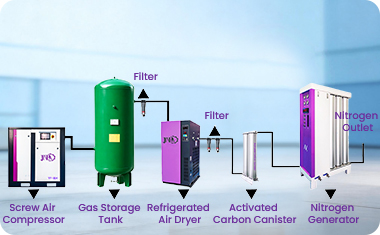
The second step is layered troubleshooting to locate the fault source. First, check the primary air filter and water separator of the equipment, drain the accumulated water in the filter cup, and check whether the water separation filter element is blocked or aged and failed. Then detect the working state of the freeze dryer and adsorption dryer in the drying system, judge whether the dryer fails to dry the compressed air thoroughly due to temperature abnormality or adsorption material failure. Finally, check the equipment automatic drainage valve to confirm whether the drainage valve is blocked, stuck or failed, resulting in unable to discharge condensed water in time, causing water backflow and system water inlet.
The third step is targeted fault repair and system recovery. For filter blockage and failure, replace the aging filter element and clean the filter pipeline thoroughly; for dryer failure, calibrate the drying temperature, replace the failed activated carbon and molecular sieve adsorption materials, and repair the dryer refrigeration system; for drainage valve failure, clean the valve body impurities, repair the stuck parts or replace the new drainage valve. After the repair is completed, perform low-pressure trial operation of the equipment, exhaust the residual moisture in the pipeline and membrane module, detect the nitrogen purity and operating pressure, and resume normal full-load operation after all parameters return to standard values.
The last step is fault prevention and daily optimization. Regularly replace the filter consumables of the equipment, check the working state of the drying system every week, and clean the drainage device regularly. For the equipment working in high-humidity environment, increase the frequency of water detection and properly adjust the operating parameters of the dryer to reduce the moisture content of intake air, fundamentally avoid the occurrence of water inlet faults and extend the service life of the membrane module.