low power nitrogen membrane generator:Analysis of Low-power Membrane
Nitrogen Generator
A low power nitrogen membrane generator is a compact on-site nitrogen
production device optimized for low power consumption, which separates nitrogen
and oxygen using hollow fiber polymer membranes. Unlike pressure swing
adsorption nitrogen generators, this type of unit has no frequently switched
pneumatic valves. It completes gas separation through the selective permeation
effect of membrane modules, featuring low power consumption and low operating
noise. It fits scenarios requiring medium or low flow rates and moderate
nitrogen purity, and is widely used in laboratories, food packaging, small
production lines and mobile working systems.
Its core working principle relies on selective gas permeation. Purified
compressed air enters hollow fiber membrane assemblies after pretreatment. Small
molecules such as oxygen, water vapor and carbon dioxide permeate quickly
through the membrane fiber walls and are vented out. Nitrogen has low
permeability, remains inside fiber bores and is collected as product gas. The
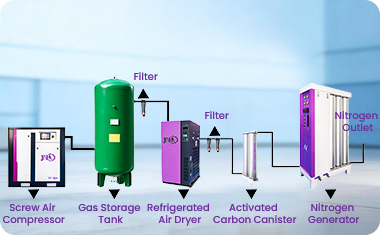
whole system consists of an air pretreatment module, membrane separation
assembly, pressure stabilizing buffer unit, online monitoring and low-power
electronic control module. The pretreatment stage includes multi-stage filters
and dryers to remove dust, oil and moisture in compressed air and prevent
pollutants from adhering to membrane surfaces and degrading membrane
performance. The low-power electric control system adopts energy-saving design
to cut standby power consumption and dynamically adjust operating states
according to gas demand, further saving electricity under intermittent gas
usage. The membrane separation process requires no regeneration of adsorbents
and no periodic pressure relief or purging. Stable nitrogen can be produced
shortly after startup as long as qualified compressed air is supplied.
The most notable advantage of a low power nitrogen membrane generator is
optimized energy consumption. Conventional nitrogen generators, especially PSA
units, continuously consume power due to periodic valve switching and maintain
cycles for adsorbent regeneration. In contrast, low-power membrane models
greatly reduce power usage in control circuits. Without moving parts, mechanical
wear is nearly eliminated. However, total system energy consumption also
includes power consumed by the upstream air compressor. The compressor and
nitrogen generator host must be evaluated as a complete package during
selection. This equipment can steadily produce nitrogen with purity from 95% to
99.5%. Higher purity demands more feed air and increases overall power
consumption. Therefore, these generators are more suitable for processes that do
not require ultra-high purity nitrogen. Selecting an appropriate nitrogen purity
matching process requirements is critical for controlling total energy use.
Apart from low power consumption, the device features simple structure and
low maintenance workload. There are no wearing moving components such as
solenoid or switching valves, so common faults like valve ageing and leakage are
avoided, cutting spare part expenses. It starts quickly with fast response and
low noise. Its compact form allows benchtop installation, small cabinet assembly
or integration inside mobile enclosures. It can be deployed in space-limited
laboratories, small food workshops, vehicle-mounted platforms or temporary field
sites. Traditional high-pressure nitrogen cylinders require frequent handling
and replacement with risks from high-pressure storage. Liquid nitrogen tanks
suffer continuous evaporation loss and limited refilling cycles. Low power
membrane nitrogen generators produce gas on demand from ambient air, eliminating
cylinder transportation and storage. It reduces long-term gas cost and eases
safety management of high-pressure gas.
It serves multiple application sectors. In research laboratories, it
supplies gas for sample purging and inert atmosphere protection for sample
pretreatment. Food industries adopt it for modified atmosphere packaging to slow
food oxidation. It provides inert shielding for light industry welding and
component storage to prevent workpiece oxidation. Small chemical facilities use
it for tank blanketing and pipeline purging. Vehicle-mounted and field emergency
operations also frequently adopt these low-power units. However, this technology
has clear limits. It is not suitable for applications requiring nitrogen purity
above 99.99%, where PSA nitrogen generation is normally preferred. Gas output is
restricted by membrane module size and inlet pressure, so single low-power
membrane units are not recommended for large-flow production.
During equipment selection, gas demand, ambient conditions and energy
indicators must be assessed comprehensively instead of only checking the rated
host power. Users shall define nitrogen flow, purity and outlet pressure,
calculate compressor power consumption and evaluate total energy use of the
whole gas supply system. Ambient temperature, humidity and dust concentration
affect membrane service life and separation efficiency. For high humidity and
dusty environments, enhanced pretreatment is required to protect membrane
modules. The unit is equipped with online oxygen monitors to track nitrogen
purity and trigger alarms upon abnormal conditions. Sleep energy-saving modes
can be activated for intermittent gas demand to reduce standby power.
Although free of moving parts, the generator is not maintenance-free.
Pretreatment filter cartridges are key consumables and must be replaced on
schedule. Failed filters allow oil and water into membrane assemblies and cause
irreversible fouling of hollow fiber membranes, directly reducing gas purity
with high repair costs. Oxygen analyzers need regular calibration to guarantee
accurate purity readings. Pipe joints shall be inspected routinely for minor
leakage. The equipment must be installed in well-ventilated areas away from heat
sources and corrosive chemicals to slow membrane ageing. From a safety
perspective, nitrogen produced is inert process gas and must never be used for
human breathing. Nitrogen is colorless and odorless; massive discharge in
confined spaces creates oxygen deficiency hazards, so proper ventilation is
mandatory. Pressure relief and pipeline purging must be completed before
maintenance to eliminate risks from residual pressure inside pipes. After
shutdown and restart, operators should wait until gas purity stabilizes before
feeding gas to downstream processes.
From the full-lifecycle perspective, low power nitrogen membrane generators
deliver good economic performance for long-term medium or low-flow gas supply
projects requiring moderate purity. Initial investment is relatively manageable,
few consumables are required and the failure rate is low. Its energy-saving
features continuously cut electricity costs during long continuous or
intermittent operation. Nevertheless, if processes demand high nitrogen purity
or large gas flow, total system power consumption rises, and different nitrogen
generation technologies should be compared for economic evaluation. During
procurement, factory test reports should be verified to check gas performance
and energy indicators and confirm membrane quality, avoiding underperforming
equipment.
In summary, the low power nitrogen membrane generator has become an
important solution for medium and small-scale on-site nitrogen supply, with
advantages including low power consumption, simple structure, flexible
deployment and easy maintenance. It effectively replaces cylinder and liquid
nitrogen gas supply and reduces on-site safety management pressure. Users should
fully understand its purity limit during selection, match equipment
specifications with process requirements, and maintain air pretreatment and
periodic consumable replacement. Enterprises and research institutes shall
select proper models according to working conditions and implement standardized
installation and routine inspection. In this way, qualified nitrogen can be
steadily obtained, achieving energy-saving operation while ensuring safe
production and laboratory work.