In the sheet metal processing industry, laser cutting has become a
mainstream precision processing method. As an auxiliary gas, nitrogen directly
affects the forming quality of cutting sections. Metal materials at high
temperatures tend to react with oxygen in the air, forming oxide layers, dross
and blackened surfaces. Nitrogen can isolate oxygen and blow away molten metal
to deliver smooth and clean cutting edges, which meets the requirements of
subsequent processes such as bending, spraying and welding.
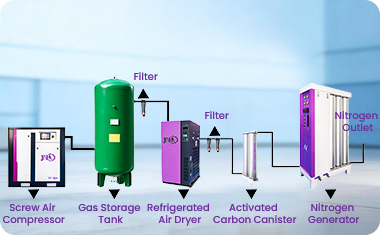
Gas produced by on-site nitrogen generators is usually at a low pressure
and cannot directly meet the gas supply requirements of cutting machines. A
boosting unit is therefore required to raise gas pressure and steadily deliver
nitrogen suitable for working conditions. A nitrogen compressor for laser
cutting connects different parts of the gas supply system. It receives
low-pressure gas from the nitrogen generator, and the gas goes through
multi-stage compression, cooling and purification before flowing into buffer
storage tanks and finally to cutting stations.
Selection of a nitrogen compressor for laser cutting shall be determined by
processing conditions, with core indicators including pressure range, flow rate
and gas cleanliness. Required gas parameters vary for different plate materials,
thicknesses and laser power levels. Cutting thin stainless steel sheets and
thick non-ferrous metals calls for different pressure and flow settings.
Oil-free models of nitrogen compressor for laser cutting are preferred for
precision cutting, as they prevent oil mist from contaminating laser lenses or
leaving marks on workpieces, stabilize the optical path and lower the frequency
of consumable replacement. Two cooling options are available: air cooling and
water cooling. Air-cooled units feature flexible layout and easy installation,
suitable for small and medium workshops, while water-cooled versions offer
consistent heat dissipation for non-stop production lines.
Routine maintenance is essential for stable gas supply. Operators shall
regularly monitor operating data including pressure, temperature and vibration,
check pipeline joints for leakage, and replace consumables such as filter
elements and seals on schedule. Pipeline design should minimize elbows and
redundant routes to reduce pressure loss. Pressure fluctuation will lead to
inconsistent cutting quality. Buffer tanks help stabilize pressure and cope with
peak gas consumption when multiple cutting machines start or stop
simultaneously.
Compared with purchasing bottled nitrogen or liquid nitrogen from
suppliers, on-site nitrogen generation matched with a nitrogen compressor for
laser cutting brings advantages for long-term continuous production. It cuts
costs for cylinder transportation and liquid refilling, and production will no
longer be restricted by external delivery schedules. Many fabricators build gas
supply systems matching their production capacity to balance upfront investment
and long-term operating expenses.
As laser power keeps increasing, the industry sets stricter standards for
stable auxiliary gas supply. Matching of the whole gas system determines the
consistency of finished products. Proper design of the gas circuit and regular
maintenance of the nitrogen compressor for laser cutting help maintain stable
pressure, purity and flow, so the high precision of laser processing can be
fully utilized. This supports sheet metal factories to deliver consistent
quality for various production orders.