In industrial scenarios with multi-station circulation, outdoor mobile
processing and shared gas supply across multiple workshops, mobile workshop
nitrogen generators have gradually replaced traditional nitrogen cylinders and
fixed nitrogen production equipment due to their flexible transportation,
plug-and-play operation and no fixed civil construction requirements. Meanwhile,
mobile workshop nitrogen generator price stands as the core consideration for
factory procurement decisions. Market quotations vary widely, ranging from
ten-thousand-yuan small laser welding models to hundreds of thousands of yuan
for large containerized equipment. The price gap stems from four major
dimensions: equipment technology, performance parameters, supporting
configurations and customized demands.
First of all, nitrogen production technology determines the base price,
mainly divided into membrane separation and PSA pressure swing adsorption.
Membrane separation models feature simple structures and compact sizes, suitable
for basic protection scenarios with nitrogen purity of 95%-99%. Their mobile
workshop nitrogen generator price is generally low, ideal for small hardware
factories and workshops with simple food packaging. PSA pressure swing
adsorption units equipped with carbon molecular sieves can produce
ultra-high-purity nitrogen of 99.99%-99.999%, applicable to laser cutting,
electronic welding and precision component packaging. The high cost of core
molecular sieves, solenoid valves and PLC control systems raises the overall
machine price by 30%-60%, making PSA the mainstream choice for medium and large
mobile workshops.
Secondly, nitrogen output and purity are critical factors widening price
gaps. Mini mobile units with 1-5 Nm³/h output, designed to supply gas for single
laser equipment, are priced between 12,000 and 50,000 RMB. Medium mobile units
of 10-50 Nm³/h for simultaneous gas supply of multiple production lines cost
80,000 to 250,000 RMB. Containerized mobile nitrogen generators over 50 Nm³/h,
used for mobile workshops in mines and field projects, are priced from 300,000
to 1,000,000 RMB. Each extra "9" of nitrogen purity upgrades the equipment’s
filtration and adsorption components, pushing up procurement costs. Blind
pursuit of ultra-high purity leads to unnecessary capital waste, so enterprises
shall select models matching their actual process requirements.
The quality of core accessories and integrated supporting systems also
affect mobile workshop nitrogen generator price. High-end models adopt imported
molecular sieves, silent air compressors, fully automatic drying and filtration
systems, shock-absorbing mobile chassis and remote intelligent monitoring
modules, delivering stable performance with a service life of 15 to 20 years.
Low-end models use ordinary domestic accessories without multi-stage drying and
filtration, featuring low upfront purchase prices but doubled long-term energy
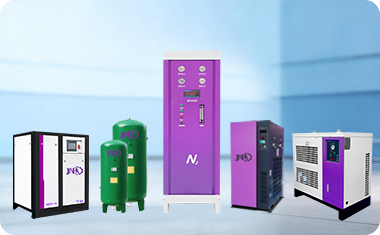
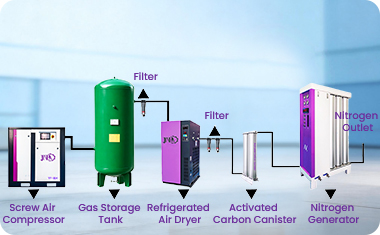
consumption and maintenance costs. Complete integrated units integrate air
compressors, refrigerated dryers and gas storage tanks for immediate production
after delivery, while simple split units require extra supporting equipment
procurement, resulting in higher overall investment.
Besides, customized requirements, certification standards and after-sales
warranty slightly adjust quotations. Food and pharmaceutical industries demand
food-grade and CE certifications, explosion-proof models fit chemical mobile
workshops, and customized trailers, rainproof cabinets and low-temperature
adaptation systems all increase costs. Procurement shall not only compare the
one-time mobile workshop nitrogen generator price, but also calculate full
life-cycle costs. Mobile nitrogen generators eliminate costs of cylinder
transportation, rental and liquid nitrogen loss. Most working conditions can
recover the extra equipment investment within 12 to 18 months, delivering far
higher long-term cost performance than traditional gas supply modes.
Comprehensive evaluation based on gas consumption scale and purity demands helps
enterprises select cost-effective equipment.