nitrogen generator system for lab use:Analysis of Nitrogen Generation
System for Laboratory
A nitrogen generator system for lab use is a compact on-site gas supply
device designed for analytical testing, sample pretreatment, material research
and other laboratory applications. It continuously produces stable nitrogen and
gradually replaces traditional high-pressure nitrogen cylinders and liquid
nitrogen dewars, becoming a common gas accessory in many research laboratories.
Laboratory environments impose strict requirements on gas purity, pressure
stability, low noise, cleanliness and footprint. Different from large-scale
industrial nitrogen generation equipment, lab systems are mainly benchtop or
small cabinet-type units adapted to limited space in instrument rooms,
delivering inert protective gas for chromatography, mass spectrometry, sample
concentration and other analytical instruments.
Two mainstream technologies are adopted in laboratory nitrogen generation
systems: membrane separation and pressure swing adsorption (PSA). Membrane
separation models realize nitrogen-oxygen separation via hollow fiber membranes.
When compressed air flows into membrane modules, oxygen and water vapor pass
through fiber membranes preferentially while nitrogen is retained and enriched.
This solution features simple structure and low maintenance demand, generally
suitable for scenarios requiring nitrogen purity from 95% to 99.5%, such as
sample purging and inert atmosphere shielding. PSA nitrogen generators use
carbon molecular sieve as adsorbent media. Twin towers work alternately for
pressurized adsorption and depressurization regeneration, delivering high-purity
nitrogen up to 99.999%, which fits high-precision analytical instruments
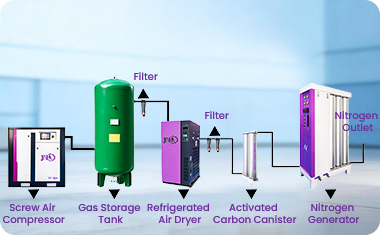
including LC-MS and gas chromatography. A complete system consists of an air
pretreatment module, core separation unit, pressure buffering and stabilizing
assembly, online oxygen monitoring device and automatic control module.
Compressed air goes through multi-stage filtration, oil removal and deep drying
to eliminate moisture, dust and trace oil contaminants, protecting membrane
assemblies or carbon molecular sieves from damage and maintaining stable gas
quality in long-term operation. Built-in pressure stabilization mitigates
airflow fluctuations and prevents sudden pressure surges that may interfere with
precision analytical instruments.
This system serves a wide range of laboratory applications. In analytical
chemistry, it provides carrier gas for gas chromatography, nebulizing gas and
sheath gas for LC-MS. During sample pretreatment, nitrogen is used for nitrogen
blow concentration to rapidly remove volatile solvents and prevent sample
oxidation. In material laboratories, it creates inert shielding atmosphere for
material sintering and sample storage to isolate oxygen and avoid sample
deterioration. In biological and pharmaceutical labs, nitrogen protects culture
media and preserves sealed reagents to reduce oxidative degradation.
Conventional cylinder gas supply has obvious drawbacks. Cylinder transportation
and replacement consume manpower. High-pressure gas cylinders bring safety risks
during storage, and gas pressure drops as the cylinder empties, which may impair
experimental repeatability. Liquid nitrogen tanks suffer continuous evaporation
loss and require regular refilling. Laboratory nitrogen generation systems take
ambient air as raw material and produce gas on demand once connected to power
and clean compressed air. Continuous 24-hour gas supply reduces experiment
interruption risks and improves data consistency.
Selection should be based on actual lab gas consumption parameters instead
of blindly pursuing excessive purity. Users first define required nitrogen
purity, flow rate, outlet pressure and dew point. Instrument requirements vary
greatly: regular nitrogen evaporators can work with medium-purity nitrogen,
while LC-MS and high-resolution mass spectrometers demand high-purity,
low-moisture nitrogen. Peak flow when multiple instruments run simultaneously
should be considered with adequate margin, so purity and pressure will not drop
when several devices start at the same time. Noise and heat dissipation are
critical for lab environments. Instruments rooms are usually compact; noisy
equipment disturbs researchers and poor heat dissipation may trigger alarms and
shutdowns. Equipment dimensions and installation style need to fit lab layout.
Benchtop units match single instruments, and small cabinet systems support
centralized gas supply for multiple devices. Besides, the system should support
convenient data logging and alarms to notify users of abnormal purity or
pressure, helping troubleshoot faults and protect expensive analytical
instruments.
Operation maintenance and safety protocols are essential for stable
performance. Though highly automated, these systems are not maintenance-free.
Air pretreatment filter cartridges are consumables requiring periodic
replacement. Failed filters allow oil and water into core separation components
and cause irreversible damage to membranes or molecular sieves with high repair
costs. Oxygen analyzers need regular calibration for reliable purity readings.
Pipe joints should be inspected routinely for minor leakage. The equipment shall
be placed in well-ventilated areas away from heat sources, corrosive reagents
and accumulated dust. Safety boundaries must be clarified: nitrogen produced by
the system is inert process gas and must never be used for human breathing.
Nitrogen is colorless and odorless; massive discharge in confined spaces creates
oxygen deficiency hazards, so lab ventilation management is mandatory. Before
maintenance, pressure relief and purging procedures must be performed to
eliminate risks from residual pressure in pipelines. Backup gas supply plans are
required in case of equipment failure to avoid prolonged experiment
shutdown.
From the perspective of compliance and whole-lifecycle cost, laboratory
nitrogen generation systems deliver advantages in long-term research projects.
Purchasing and transporting high-pressure cylinders or liquid nitrogen creates
recurring expenses, while on-site generators only incur electricity and
consumable costs after initial investment. Meanwhile, reduced cylinder storage
eases lab safety management and meets safety codes for research facilities.
However, budgets are needed for upfront procurement, commissioning and annual
maintenance. Small research groups with minimal gas demand may still choose
cylinder supply. During procurement, equipment qualifications and factory test
reports should be verified to confirm gas cleanliness indicators and avoid
impurities interfering with trace analysis.
In summary, a nitrogen generator system for lab use is a vital gas supply
solution in modern research laboratories. It offers continuous gas delivery,
stable pressure and lower risks associated with cylinder management, widely
supporting various analytical instruments. Nevertheless, selection, installation
and maintenance must match experimental requirements, with close attention paid
to purity, cleanliness, ventilation and safety. Researchers need to fully
understand system performance limits and establish standardized inspection and
maintenance workflows to steadily obtain qualified nitrogen and ensure smooth
chemical, material and biological analysis experiments.